


How does the choice of paper thickness affect the handling and durability of the final custom playing cards?
Release Time : 2026-08-07
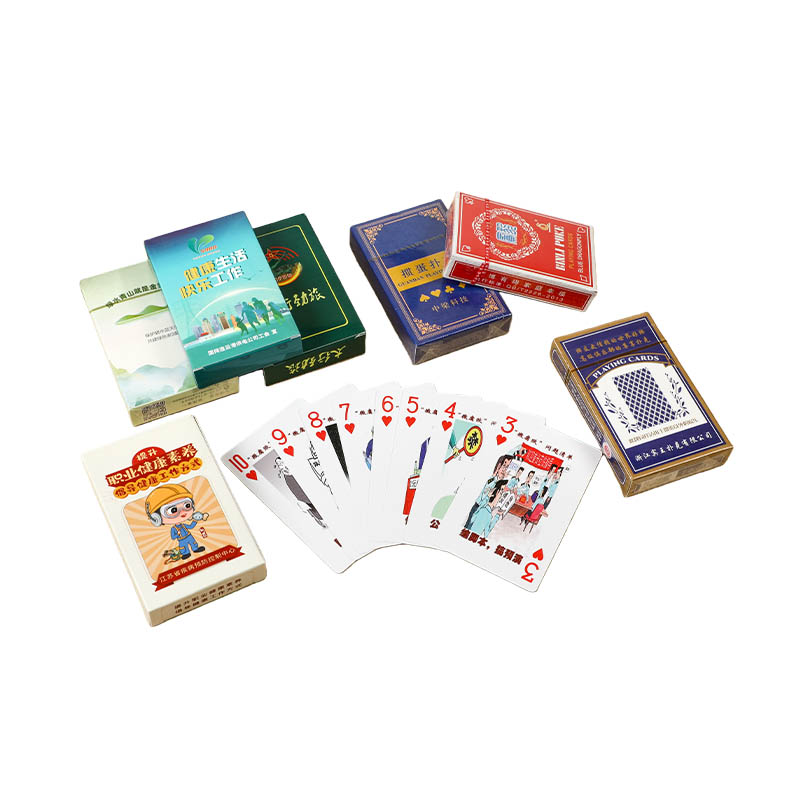
The choice of paper thickness is arguably the most critical factor in determining the overall quality, performance, and lifespan of custom playing cards. In the manufacturing of playing cards, thickness is typically measured in grams per square meter (gsm), with standard decks ranging from 250gsm to over 350gsm. This physical attribute directly influences both the tactile experience of handling the cards and their ability to withstand the rigors of gameplay.
The handling characteristics of a deck are profoundly affected by its thickness. Thinner cards, generally in the 250gsm to 280gsm range, offer a high degree of flexibility. This flexibility makes them exceptionally easy to shuffle, fan, and bridge, which is why they are often preferred for traditional card games like Poker or Bridge. The lighter weight allows players to hold a large stack comfortably without hand fatigue. Conversely, thicker cards, typically 300gsm and above, possess a much stiffer "snap" or resilience. This rigidity provides a premium, luxurious feel that is highly prized in magic performances and cardistry. The stiffness allows for precise cuts, elegant springs, and intricate flourishes, as the cards hold their shape rather than bending limply. However, if a card is too thick, it can become cumbersome to shuffle and difficult to hold in large quantities.
Durability is equally dependent on paper thickness. Playing cards are subjected to constant friction, bending, and exposure to the natural oils and moisture from human hands. Thicker paper inherently possesses greater structural integrity, making it more resistant to bending, creasing, and tearing. A 330gsm card will naturally outlast a 250gsm card in a high-friction environment because there is simply more material to absorb the physical stress. Furthermore, thicker cards are less susceptible to warping in humid conditions and are better at hiding edge wear over time.
However, the relationship between thickness and durability is not solely about the weight of a single sheet of paper. The construction of the card plays an equally vital role. Many premium custom playing cards utilize a multi-ply construction, such as a black-core or blue-core paper. This involves gluing multiple thinner layers together with an opaque core in the middle. This laminated structure not only prevents the cards from being see-through but also creates a composite material that is significantly more durable and resilient than a single thick sheet of paper. The core acts as a shock absorber, allowing the card to bend and snap back without breaking the surface fibers.
The choice of thickness also dictates the compatibility with various surface finishes. Thicker cards provide a more substantial base for premium finishing techniques like embossing, debossing, and heavy foil stamping. The depth of an embossed logo on a 350gsm card will look and feel much more pronounced than on a thinner stock. Additionally, thicker cards can better support protective coatings, such as UV varnish or linen finishes, which are essential for reducing friction and extending the deck's playable life.
Ultimately, selecting the right paper thickness for custom playing cards requires balancing the intended use with the desired user experience. A casino might opt for a thinner, highly flexible card that is easily replaced, while a collector’s edition magic deck will demand a thick, multi-ply stock with a crisp snap. By understanding how thickness impacts both the delicate art of handling and the brute force of durability, manufacturers can tailor their custom playing cards to meet the exacting standards of players, performers, and collectors alike.
The handling characteristics of a deck are profoundly affected by its thickness. Thinner cards, generally in the 250gsm to 280gsm range, offer a high degree of flexibility. This flexibility makes them exceptionally easy to shuffle, fan, and bridge, which is why they are often preferred for traditional card games like Poker or Bridge. The lighter weight allows players to hold a large stack comfortably without hand fatigue. Conversely, thicker cards, typically 300gsm and above, possess a much stiffer "snap" or resilience. This rigidity provides a premium, luxurious feel that is highly prized in magic performances and cardistry. The stiffness allows for precise cuts, elegant springs, and intricate flourishes, as the cards hold their shape rather than bending limply. However, if a card is too thick, it can become cumbersome to shuffle and difficult to hold in large quantities.
Durability is equally dependent on paper thickness. Playing cards are subjected to constant friction, bending, and exposure to the natural oils and moisture from human hands. Thicker paper inherently possesses greater structural integrity, making it more resistant to bending, creasing, and tearing. A 330gsm card will naturally outlast a 250gsm card in a high-friction environment because there is simply more material to absorb the physical stress. Furthermore, thicker cards are less susceptible to warping in humid conditions and are better at hiding edge wear over time.
However, the relationship between thickness and durability is not solely about the weight of a single sheet of paper. The construction of the card plays an equally vital role. Many premium custom playing cards utilize a multi-ply construction, such as a black-core or blue-core paper. This involves gluing multiple thinner layers together with an opaque core in the middle. This laminated structure not only prevents the cards from being see-through but also creates a composite material that is significantly more durable and resilient than a single thick sheet of paper. The core acts as a shock absorber, allowing the card to bend and snap back without breaking the surface fibers.
The choice of thickness also dictates the compatibility with various surface finishes. Thicker cards provide a more substantial base for premium finishing techniques like embossing, debossing, and heavy foil stamping. The depth of an embossed logo on a 350gsm card will look and feel much more pronounced than on a thinner stock. Additionally, thicker cards can better support protective coatings, such as UV varnish or linen finishes, which are essential for reducing friction and extending the deck's playable life.
Ultimately, selecting the right paper thickness for custom playing cards requires balancing the intended use with the desired user experience. A casino might opt for a thinner, highly flexible card that is easily replaced, while a collector’s edition magic deck will demand a thick, multi-ply stock with a crisp snap. By understanding how thickness impacts both the delicate art of handling and the brute force of durability, manufacturers can tailor their custom playing cards to meet the exacting standards of players, performers, and collectors alike.