


How do color-printed labels meet the dimensional accuracy and stability requirements of automated labeling equipment?
Release Time : 2026-07-24
With the increasing prevalence of automated packaging production lines, color-printed labels not only serve the functions of product identification, brand promotion, and information display, but also need to work efficiently with automated labeling equipment. Automated labeling equipment operates at high speeds and with strong continuity, placing high demands on the dimensional accuracy of labels. If there are deviations in the length, width, or die-cutting dimensions of the labels, problems such as label misalignment, missed labels, and duplicate labels can easily occur, affecting production efficiency and product appearance. Therefore, high-quality color-printed labels must strictly control dimensional tolerances in printing, die-cutting, and rewinding processes to ensure that each label is consistent in size, providing stable and reliable operating conditions for automated labeling equipment.
1. High-precision printing and die-cutting ensure label consistency
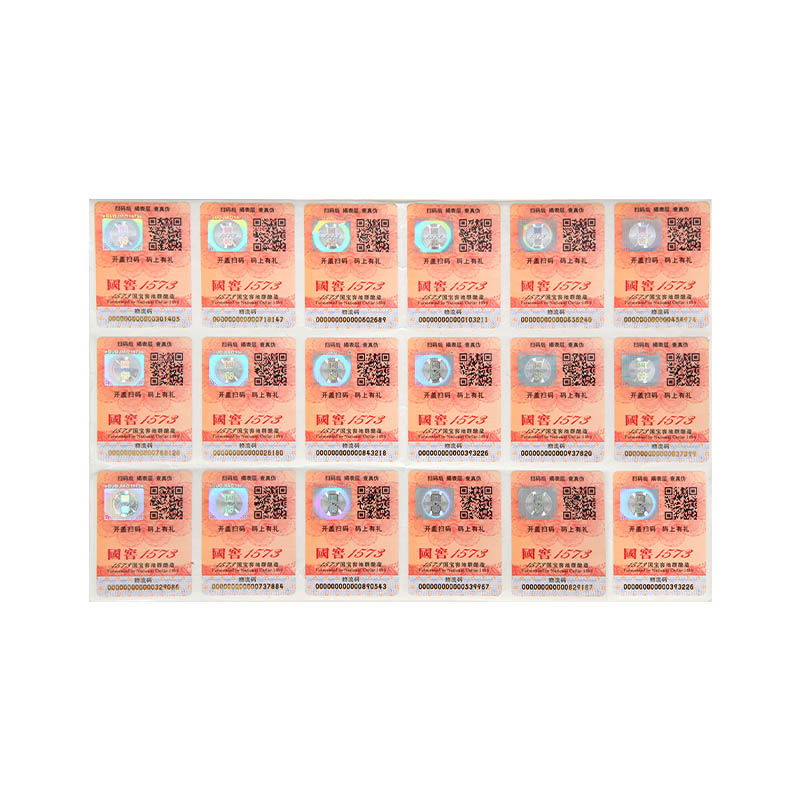
To meet the requirements of automated labeling equipment, color-printed labels are typically produced using high-precision printing equipment and advanced die-cutting processes. During the printing process, precise registration control technology ensures the accuracy of patterns, text, QR codes, and positioning marks, avoiding printing misalignment that could affect recognition. Subsequently, high-precision die-cutting equipment is used to process the labels, ensuring neat edges and uniform dimensions, reducing burrs, gaps, and shape errors. Stable die-cutting precision not only improves the label's appearance quality but also ensures smooth peeling from the backing paper during the labeling process, avoiding label jamming or breakage, and improving automatic labeling efficiency.
2. Material Stability Improves Continuous Labeling
Besides dimensional accuracy, the stability of the label material itself also affects the performance of automatic labeling equipment. High-quality color printing labels typically use face stock, backing paper, and adhesives with good dimensional stability, maintaining flatness under different temperature and humidity conditions, and are less prone to curling, shrinkage, or deformation. At the same time, a reasonable adhesive layer design ensures even force during peeling, preventing premature detachment and avoiding excessive stickiness that could affect labeling speed. For high-speed production lines, stable material properties reduce equipment downtime for adjustments, improving overall line efficiency.
3. Precise Positioning Meets the Needs of High-Speed Automation
Modern automatic labeling equipment is generally equipped with photoelectric sensors or vision recognition systems, achieving precise application by identifying label spacing, positioning points, or color marks. Therefore, color printing labels require clear positioning marks, consistent spacing, and uniform winding tension to ensure that equipment can quickly and accurately identify the position of each label. Simultaneously, strict control over winding quality during production is crucial to prevent uneven label tension, misalignment, or wrinkles, ensuring smooth label transport and meeting the demands of high-speed labeling equipment for continuous operation over extended periods, further improving packaging quality and production cycle time.
With the continuous development of intelligent manufacturing and automated packaging technologies, color printing labels are constantly upgrading towards higher precision, higher stability, and greater intelligence. From high-quality printing equipment and precision die-cutting processes to stable label materials and a rigorous quality inspection system, each production stage works together to ensure the consistency of label dimensions and the stability of the labeling process.
1. High-precision printing and die-cutting ensure label consistency
To meet the requirements of automated labeling equipment, color-printed labels are typically produced using high-precision printing equipment and advanced die-cutting processes. During the printing process, precise registration control technology ensures the accuracy of patterns, text, QR codes, and positioning marks, avoiding printing misalignment that could affect recognition. Subsequently, high-precision die-cutting equipment is used to process the labels, ensuring neat edges and uniform dimensions, reducing burrs, gaps, and shape errors. Stable die-cutting precision not only improves the label's appearance quality but also ensures smooth peeling from the backing paper during the labeling process, avoiding label jamming or breakage, and improving automatic labeling efficiency.
2. Material Stability Improves Continuous Labeling
Besides dimensional accuracy, the stability of the label material itself also affects the performance of automatic labeling equipment. High-quality color printing labels typically use face stock, backing paper, and adhesives with good dimensional stability, maintaining flatness under different temperature and humidity conditions, and are less prone to curling, shrinkage, or deformation. At the same time, a reasonable adhesive layer design ensures even force during peeling, preventing premature detachment and avoiding excessive stickiness that could affect labeling speed. For high-speed production lines, stable material properties reduce equipment downtime for adjustments, improving overall line efficiency.
3. Precise Positioning Meets the Needs of High-Speed Automation
Modern automatic labeling equipment is generally equipped with photoelectric sensors or vision recognition systems, achieving precise application by identifying label spacing, positioning points, or color marks. Therefore, color printing labels require clear positioning marks, consistent spacing, and uniform winding tension to ensure that equipment can quickly and accurately identify the position of each label. Simultaneously, strict control over winding quality during production is crucial to prevent uneven label tension, misalignment, or wrinkles, ensuring smooth label transport and meeting the demands of high-speed labeling equipment for continuous operation over extended periods, further improving packaging quality and production cycle time.
With the continuous development of intelligent manufacturing and automated packaging technologies, color printing labels are constantly upgrading towards higher precision, higher stability, and greater intelligence. From high-quality printing equipment and precision die-cutting processes to stable label materials and a rigorous quality inspection system, each production stage works together to ensure the consistency of label dimensions and the stability of the labeling process.