



How Do Customized Anti-Counterfeiting Labels Integrate Multiple Technologies to Maximize Brand Security?
Release Time : 2026-04-22
The proliferation of counterfeit goods in the global market has necessitated a paradigm shift in how brands approach product authentication. Traditional single-layer security measures, such as simple holograms or standard barcodes, are increasingly vulnerable to replication by sophisticated illicit manufacturers. To combat this, the industry has moved toward customized anti-counterfeiting labels that employ a multi-layered defense strategy. By integrating physical, digital, and chemical technologies into a single cohesive unit, these labels create a security architecture that is exponentially more difficult to compromise. This holistic approach ensures that even if one layer of security is breached, subsequent layers remain intact to verify the product's authenticity and protect the brand's integrity.
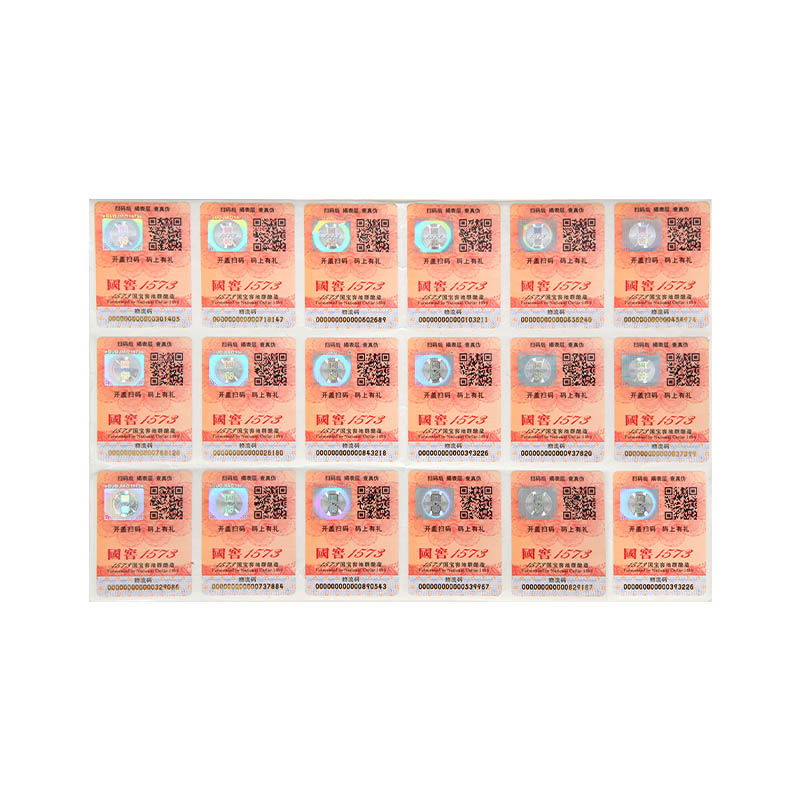
The foundation of this multi-technology integration lies in the combination of overt and covert features. Overt features are designed for immediate visual verification by consumers and retailers without the need for specialized tools. These often include complex holographic imagery, optically variable inks that change color based on the viewing angle, and guilloche patterns similar to those found on currency. Customization allows these visual elements to be tailored specifically to the brand's identity, making them harder to replicate accurately. For instance, a customized label might feature a 3D hologram of the brand's logo that appears to float above the surface, a visual cue that is instantly recognizable and difficult to forge using standard printing equipment.
Beneath these visible layers lie covert features, which serve as a second line of defense for trained personnel and law enforcement. These elements are invisible to the naked eye and require specific triggers to be revealed. Common examples include ultraviolet fluorescent inks that glow under black light, infrared-absorbing pigments, and microtext that appears as a solid line to the naked eye but reveals distinct lettering under magnification. By embedding these hidden markers into the customized design, manufacturers create a secret signature within the label. A counterfeiter might successfully replicate the visual appearance of the hologram, but without knowledge of the specific chemical composition of the invisible inks, the label will fail authentication under professional scrutiny.
The integration of digital technologies has further revolutionized the capabilities of customized anti-counterfeiting labels. The "one object, one code" philosophy assigns a unique digital identity to every single product unit, typically through a serialized QR code or a 2D barcode. Unlike static codes, these unique identifiers are encrypted and linked to a secure cloud-based database. When a consumer scans the code with a smartphone, the system verifies the product's authenticity in real-time. If the code has been scanned previously or does not exist in the database, the system flags it as a potential fake. This digital layer transforms the label from a passive sticker into an active communication channel, engaging the consumer in the authentication process while simultaneously gathering valuable data on product distribution and consumer behavior.
To elevate security beyond simple digital verification, manufacturers are increasingly embedding Radio Frequency Identification (RFID) and Near Field Communication (NFC) chips into customized labels. These electronic components store encrypted data that cannot be visually copied or altered. An NFC-enabled label allows a user to simply tap their smartphone against the product to trigger an authentication handshake with a secure server. The chip can store a unique identifier that is cryptographically signed, making it virtually impossible to clone. This technology is particularly effective for high-value goods, as it provides a robust link between the physical item and its digital twin, ensuring that the supply chain remains transparent and secure from the factory floor to the end user.
Material science also plays a pivotal role in the customization of anti-counterfeiting labels. The physical substrate of the label is often engineered to be tamper-evident or tamper-proof. Materials such as destructible vinyl or void polyester are designed to fracture or leave a distinct residue, such as the word "VOID," if an attempt is made to peel the label off. This prevents the illicit practice of "label swapping," where a genuine label is removed from an authentic product and affixed to a counterfeit one. By customizing the adhesive properties and the structural integrity of the face stock, label manufacturers ensure that the security device is permanently bonded to the product, acting as a physical seal of authenticity.
Advanced printing techniques further complicate the task of the counterfeiter. High-resolution intaglio printing, laser etching, and variable data printing allow for the creation of intricate details that are beyond the capabilities of commercial offset printers used by counterfeiters. For example, customized labels may incorporate kinetic effects, where images appear to move as the label is tilted, or moiré patterns that reveal hidden messages when overlaid with a specific decoder film. These effects rely on precise micro-optics and nanotechnology, requiring industrial-grade equipment and proprietary software to produce. The sheer technical barrier to entry created by these printing methods serves as a powerful deterrent against mass replication.
The convergence of these technologies is managed through sophisticated backend software systems. A comprehensive anti-counterfeiting solution does not just print a label; it manages the lifecycle of the data associated with it. This involves generating secure, random alphanumeric codes that are cryptographically hashed and stored on a blockchain or a secure server. The system tracks the status of each code, monitoring for duplicate scans or suspicious activity patterns. If a specific batch of labels is compromised, the system can instantly invalidate those codes, rendering the physical labels useless for authentication. This dynamic capability ensures that the security infrastructure can adapt to threats in real-time, maintaining the integrity of the brand protection ecosystem.
Ultimately, the strength of customized anti-counterfeiting labels lies in their complexity and the synergy between their various components. By weaving together visual deterrents, hidden chemical markers, digital encryption, electronic identification, and tamper-evident materials, brands can construct a formidable barrier against fraud. This multi-faceted approach not only safeguards revenue and reputation but also protects consumers from the potential safety hazards associated with counterfeit goods. As technology evolves, these labels will continue to incorporate new innovations, ensuring that brand security remains one step ahead of those who seek to undermine it.
The foundation of this multi-technology integration lies in the combination of overt and covert features. Overt features are designed for immediate visual verification by consumers and retailers without the need for specialized tools. These often include complex holographic imagery, optically variable inks that change color based on the viewing angle, and guilloche patterns similar to those found on currency. Customization allows these visual elements to be tailored specifically to the brand's identity, making them harder to replicate accurately. For instance, a customized label might feature a 3D hologram of the brand's logo that appears to float above the surface, a visual cue that is instantly recognizable and difficult to forge using standard printing equipment.
Beneath these visible layers lie covert features, which serve as a second line of defense for trained personnel and law enforcement. These elements are invisible to the naked eye and require specific triggers to be revealed. Common examples include ultraviolet fluorescent inks that glow under black light, infrared-absorbing pigments, and microtext that appears as a solid line to the naked eye but reveals distinct lettering under magnification. By embedding these hidden markers into the customized design, manufacturers create a secret signature within the label. A counterfeiter might successfully replicate the visual appearance of the hologram, but without knowledge of the specific chemical composition of the invisible inks, the label will fail authentication under professional scrutiny.
The integration of digital technologies has further revolutionized the capabilities of customized anti-counterfeiting labels. The "one object, one code" philosophy assigns a unique digital identity to every single product unit, typically through a serialized QR code or a 2D barcode. Unlike static codes, these unique identifiers are encrypted and linked to a secure cloud-based database. When a consumer scans the code with a smartphone, the system verifies the product's authenticity in real-time. If the code has been scanned previously or does not exist in the database, the system flags it as a potential fake. This digital layer transforms the label from a passive sticker into an active communication channel, engaging the consumer in the authentication process while simultaneously gathering valuable data on product distribution and consumer behavior.
To elevate security beyond simple digital verification, manufacturers are increasingly embedding Radio Frequency Identification (RFID) and Near Field Communication (NFC) chips into customized labels. These electronic components store encrypted data that cannot be visually copied or altered. An NFC-enabled label allows a user to simply tap their smartphone against the product to trigger an authentication handshake with a secure server. The chip can store a unique identifier that is cryptographically signed, making it virtually impossible to clone. This technology is particularly effective for high-value goods, as it provides a robust link between the physical item and its digital twin, ensuring that the supply chain remains transparent and secure from the factory floor to the end user.
Material science also plays a pivotal role in the customization of anti-counterfeiting labels. The physical substrate of the label is often engineered to be tamper-evident or tamper-proof. Materials such as destructible vinyl or void polyester are designed to fracture or leave a distinct residue, such as the word "VOID," if an attempt is made to peel the label off. This prevents the illicit practice of "label swapping," where a genuine label is removed from an authentic product and affixed to a counterfeit one. By customizing the adhesive properties and the structural integrity of the face stock, label manufacturers ensure that the security device is permanently bonded to the product, acting as a physical seal of authenticity.
Advanced printing techniques further complicate the task of the counterfeiter. High-resolution intaglio printing, laser etching, and variable data printing allow for the creation of intricate details that are beyond the capabilities of commercial offset printers used by counterfeiters. For example, customized labels may incorporate kinetic effects, where images appear to move as the label is tilted, or moiré patterns that reveal hidden messages when overlaid with a specific decoder film. These effects rely on precise micro-optics and nanotechnology, requiring industrial-grade equipment and proprietary software to produce. The sheer technical barrier to entry created by these printing methods serves as a powerful deterrent against mass replication.
The convergence of these technologies is managed through sophisticated backend software systems. A comprehensive anti-counterfeiting solution does not just print a label; it manages the lifecycle of the data associated with it. This involves generating secure, random alphanumeric codes that are cryptographically hashed and stored on a blockchain or a secure server. The system tracks the status of each code, monitoring for duplicate scans or suspicious activity patterns. If a specific batch of labels is compromised, the system can instantly invalidate those codes, rendering the physical labels useless for authentication. This dynamic capability ensures that the security infrastructure can adapt to threats in real-time, maintaining the integrity of the brand protection ecosystem.
Ultimately, the strength of customized anti-counterfeiting labels lies in their complexity and the synergy between their various components. By weaving together visual deterrents, hidden chemical markers, digital encryption, electronic identification, and tamper-evident materials, brands can construct a formidable barrier against fraud. This multi-faceted approach not only safeguards revenue and reputation but also protects consumers from the potential safety hazards associated with counterfeit goods. As technology evolves, these labels will continue to incorporate new innovations, ensuring that brand security remains one step ahead of those who seek to undermine it.