



How do customized anti-counterfeiting labels build a solid defense of brand trust with their unique identification codes?
Release Time : 2026-03-12
In today's highly prosperous commodity economy, brands and businesses face unprecedented challenges. The proliferation of counterfeit and substandard products not only erodes market share and profits but also severely damages consumer rights and trust in brands. In this challenging environment, customized anti-counterfeiting labels have emerged. They are no longer just simple stickers but have evolved into product "digital ID cards" integrating high technology, big data, and unique design, becoming a crucial line of defense connecting brands and consumers and safeguarding market integrity.
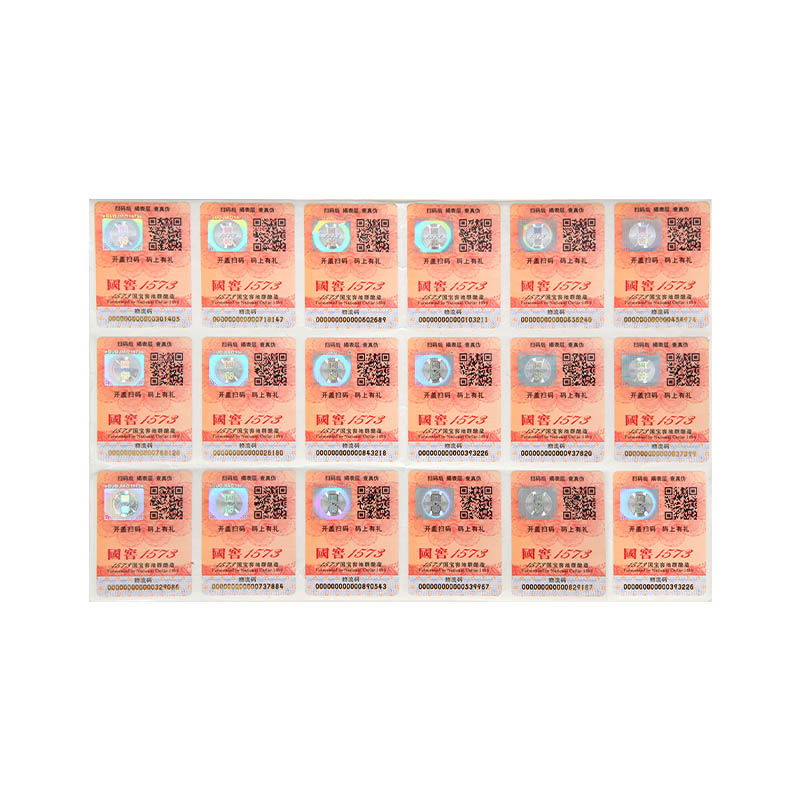
The core value of customized anti-counterfeiting labels lies in their uncopyable uniqueness. Traditional general anti-counterfeiting methods are often easily counterfeited by criminals in large quantities, while customized solutions eliminate this risk at the source. Each customized label has a globally unique identification code, generated using one-item-one-code technology and combined with complex encryption algorithms. This ensures that even if counterfeiters obtain the image of a single label, they cannot deduce the coding patterns of other labels. This uniqueness endows each product with an independent digital life. No matter where a product is in the world, its entire history can be traced instantly by scanning the label, leaving no room for counterfeit products to hide.
Technological integration and innovation are the driving force behind the continuous evolution of customized anti-counterfeiting labels. Modern customized labels have long surpassed the traditional physical anti-counterfeiting methods such as simple laser holography or thermochromic inks, and have instead expanded deeply into digitalization and intelligence. QR codes, RFID chips, and NFC technologies are cleverly integrated into the label design. Consumers can simply scan the code with their smartphones to be redirected to the brand's official verification page to view the product's production batch, raw material source, logistics trajectory, and even quality inspection reports. This transparent information display not only greatly lowers the barrier to authentication for consumers but also establishes a deep emotional connection through interaction. Simultaneously, the backend system can record the time, location, and device information of each scan in real time. Once the system detects that the same code has been scanned multiple times in different locations within a short period, it will immediately trigger an early warning mechanism, helping brands quickly identify clues of counterfeit or parallel imports and achieve proactive market control.
The artistry of design and the practicality of function are perfectly unified in customized anti-counterfeiting labels. As a direct carrier of brand image, the design of anti-counterfeiting labels must complement the overall packaging style of the product, being both aesthetically pleasing and highlighting the brand's unique personality. Professional customization services can tailor-make exclusive visual symbols based on the brand's color scheme, logo shape, and cultural connotations. Whether it's using invisible fluorescent ink to reveal the brand's hidden mark under ultraviolet light or employing microtext technology to integrate the brand name into a seemingly ordinary background, these exquisite design details silently convey the brand's craftsmanship and sincerity. This visual uniqueness not only enhances the product's perceived quality but also increases the difficulty and cost for counterfeiters, as replicating high-precision customized processes requires expensive equipment and technological investment, often deterring counterfeiters.
The application scenarios of customized anti-counterfeiting labels have permeated all walks of life, from high-end luxury goods and famous wines and cigarettes to food, pharmaceuticals, and electronic components, all benefiting from the security provided by this technology. For the pharmaceutical industry, it concerns life safety, effectively preventing counterfeit drugs from entering the market; for the luxury goods industry, it serves as a moat maintaining brand scarcity and high premiums; for agricultural products, it's a powerful tool for proving authenticity and enhancing added value. By giving products a traceable digital identity, customized anti-counterfeiting labels not only solve the problem of authenticity verification but also drive the digital transformation of supply chain management, helping companies optimize inventory, conduct precise marketing, and achieve intelligent management across the entire chain from production to end-sales.
In the grand narrative of building a trustworthy society, customized anti-counterfeiting labels play an indispensable role. They are not only a shield for corporate self-protection but also a guardian of consumer rights. When consumers can easily and conveniently verify product authenticity, consumer confidence is rebuilt, and the market environment is purified. With the further introduction of cutting-edge technologies such as blockchain, future customized anti-counterfeiting labels will be more decentralized and tamper-proof, forming a trust network based on multi-party consensus. This small label carries immense responsibility and hope. It will continue to evolve, using technology to solidify the foundation of brand trust, allowing the brilliance of genuine products to illuminate every corner of the market, and propelling commercial civilization towards a more transparent, fair, and healthy direction.
The core value of customized anti-counterfeiting labels lies in their uncopyable uniqueness. Traditional general anti-counterfeiting methods are often easily counterfeited by criminals in large quantities, while customized solutions eliminate this risk at the source. Each customized label has a globally unique identification code, generated using one-item-one-code technology and combined with complex encryption algorithms. This ensures that even if counterfeiters obtain the image of a single label, they cannot deduce the coding patterns of other labels. This uniqueness endows each product with an independent digital life. No matter where a product is in the world, its entire history can be traced instantly by scanning the label, leaving no room for counterfeit products to hide.
Technological integration and innovation are the driving force behind the continuous evolution of customized anti-counterfeiting labels. Modern customized labels have long surpassed the traditional physical anti-counterfeiting methods such as simple laser holography or thermochromic inks, and have instead expanded deeply into digitalization and intelligence. QR codes, RFID chips, and NFC technologies are cleverly integrated into the label design. Consumers can simply scan the code with their smartphones to be redirected to the brand's official verification page to view the product's production batch, raw material source, logistics trajectory, and even quality inspection reports. This transparent information display not only greatly lowers the barrier to authentication for consumers but also establishes a deep emotional connection through interaction. Simultaneously, the backend system can record the time, location, and device information of each scan in real time. Once the system detects that the same code has been scanned multiple times in different locations within a short period, it will immediately trigger an early warning mechanism, helping brands quickly identify clues of counterfeit or parallel imports and achieve proactive market control.
The artistry of design and the practicality of function are perfectly unified in customized anti-counterfeiting labels. As a direct carrier of brand image, the design of anti-counterfeiting labels must complement the overall packaging style of the product, being both aesthetically pleasing and highlighting the brand's unique personality. Professional customization services can tailor-make exclusive visual symbols based on the brand's color scheme, logo shape, and cultural connotations. Whether it's using invisible fluorescent ink to reveal the brand's hidden mark under ultraviolet light or employing microtext technology to integrate the brand name into a seemingly ordinary background, these exquisite design details silently convey the brand's craftsmanship and sincerity. This visual uniqueness not only enhances the product's perceived quality but also increases the difficulty and cost for counterfeiters, as replicating high-precision customized processes requires expensive equipment and technological investment, often deterring counterfeiters.
The application scenarios of customized anti-counterfeiting labels have permeated all walks of life, from high-end luxury goods and famous wines and cigarettes to food, pharmaceuticals, and electronic components, all benefiting from the security provided by this technology. For the pharmaceutical industry, it concerns life safety, effectively preventing counterfeit drugs from entering the market; for the luxury goods industry, it serves as a moat maintaining brand scarcity and high premiums; for agricultural products, it's a powerful tool for proving authenticity and enhancing added value. By giving products a traceable digital identity, customized anti-counterfeiting labels not only solve the problem of authenticity verification but also drive the digital transformation of supply chain management, helping companies optimize inventory, conduct precise marketing, and achieve intelligent management across the entire chain from production to end-sales.
In the grand narrative of building a trustworthy society, customized anti-counterfeiting labels play an indispensable role. They are not only a shield for corporate self-protection but also a guardian of consumer rights. When consumers can easily and conveniently verify product authenticity, consumer confidence is rebuilt, and the market environment is purified. With the further introduction of cutting-edge technologies such as blockchain, future customized anti-counterfeiting labels will be more decentralized and tamper-proof, forming a trust network based on multi-party consensus. This small label carries immense responsibility and hope. It will continue to evolve, using technology to solidify the foundation of brand trust, allowing the brilliance of genuine products to illuminate every corner of the market, and propelling commercial civilization towards a more transparent, fair, and healthy direction.