



How do anti-counterfeiting labels improve supply chain transparency and management efficiency in product traceability management?
Release Time : 2026-06-11
In modern commodity circulation systems, supply chain management has evolved from simple logistics and transportation to a comprehensive management model encompassing production, warehousing, distribution, sales, and after-sales service. As the market continues to expand and consumers' demands for product authenticity increase, companies are placing greater emphasis on building product traceability systems. Anti-counterfeiting labels, as a crucial carrier connecting products with digital information, not only serve the function of verifying authenticity but also play a key role in product traceability management. By assigning a unique identifier to each product, anti-counterfeiting labels can effectively improve supply chain transparency and management efficiency, creating greater value for both businesses and consumers.
1. One Item, One Code Enables Full-Process Product Tracking
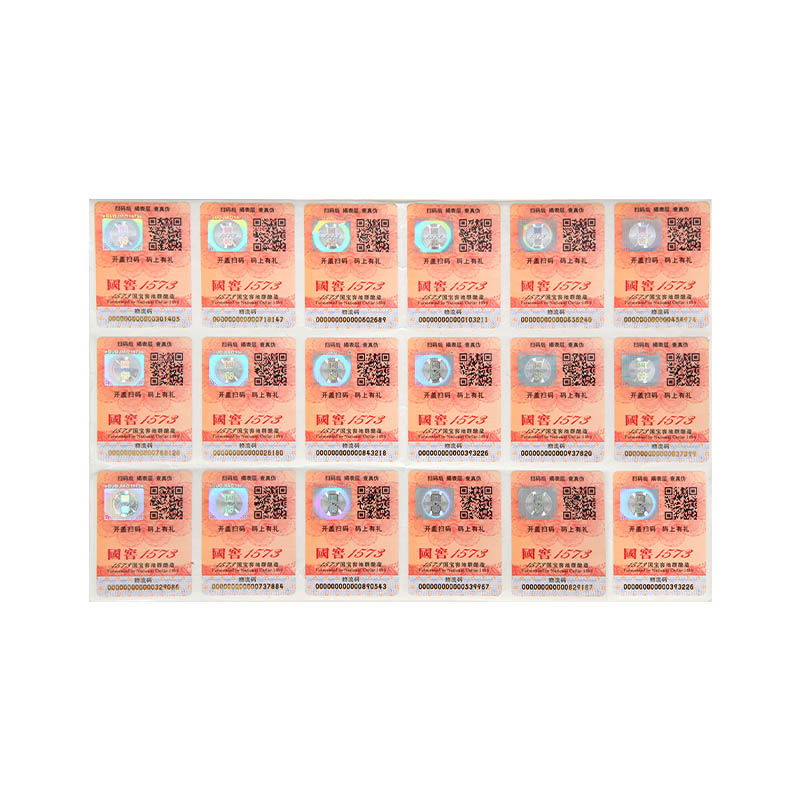
One of the key advantages of anti-counterfeiting labels lies in the "one item, one code" management model. Each product is assigned a unique code during the production stage, establishing a corresponding relationship with product information. From raw material procurement, production and processing, packaging and warehousing to logistics and distribution and final sales, data at each stage can be recorded and linked through coding. Once a product enters the market, companies can quickly track its flow based on label information, achieving end-to-end tracking management. This visualized data link makes supply chain information more transparent, providing companies with accurate management data.
2. Enhancing Supply Chain Information Transparency
In traditional supply chain management, information at each stage is often relatively independent, easily forming information silos. Once product quality issues or market anomalies occur, companies struggle to trace responsibility in a timely manner. However, anti-counterfeiting labels, combined with an information management platform, can unify and integrate production, warehousing, logistics, and sales data. Relevant information is updated in real time and synchronized to the management system, enabling companies to clearly understand the status changes of products at each stage. Transparent information flow not only helps improve management efficiency but also enhances collaboration between upstream and downstream supply chains.
3. Strengthening Anti-Counterfeiting and Market Supervision Capabilities
In cross-regional sales systems, counterfeiting has always been a significant challenge for companies. By recording product distribution paths using anti-counterfeiting labels, companies can accurately grasp the market areas and sales channels their products enter. When product flow deviates from the preset sales area, the system can issue timely warnings, helping companies quickly locate abnormal distribution links. This not only maintains market order but also protects the rights and interests of distributors and improves the standardization of channel management.
4. Improves Quality Traceability and Risk Control Efficiency
When product quality issues arise, rapid traceability is crucial for minimizing losses. Anti-counterfeiting labels record product batches, production times, production lines, and logistics information. Once a problematic product is discovered, companies can quickly pinpoint the relevant batch and distribution area, implementing precise recalls without extensive investigations. This efficient traceability mechanism not only shortens problem-solving time but also reduces operating costs and enhances risk management capabilities.
5. Promotes Digital Supply Chain Upgrades
With the development of big data, cloud computing, and IoT technologies, anti-counterfeiting labels are no longer just simple information identification tools but crucial entry points into the digital supply chain. Through barcode verification, companies can obtain market circulation data, consumer query data, and sales region data, supporting market analysis and operational decision-making. Leveraging these data resources, companies can more accurately optimize inventory management, channel layout, and market strategies, thereby further improving overall operational efficiency.
6. Enhancing Consumer Trust and Brand Value
For consumers, anti-counterfeiting labels provide a convenient way to verify authenticity. Scanning the code allows them to learn about the product's origin, production information, and distribution process, increasing purchasing transparency. When consumers can easily verify product authenticity, their trust in the brand also increases. Simultaneously, a comprehensive traceability system demonstrates a company's commitment to product quality and market management, helping to establish a positive brand image and market reputation.
In conclusion, anti-counterfeiting labels not only enable one-item-one-code tracking in product traceability management but also improve supply chain transparency, strengthen channel supervision, increase quality traceability efficiency, and drive the digital management upgrade of enterprises. With the continuous development of intelligent anti-counterfeiting and digital technologies, anti-counterfeiting labels are gradually evolving from a simple authenticity verification tool into a crucial management platform connecting the entire process of production, distribution, and consumption, providing strong support for the construction of modern supply chain systems.
1. One Item, One Code Enables Full-Process Product Tracking
One of the key advantages of anti-counterfeiting labels lies in the "one item, one code" management model. Each product is assigned a unique code during the production stage, establishing a corresponding relationship with product information. From raw material procurement, production and processing, packaging and warehousing to logistics and distribution and final sales, data at each stage can be recorded and linked through coding. Once a product enters the market, companies can quickly track its flow based on label information, achieving end-to-end tracking management. This visualized data link makes supply chain information more transparent, providing companies with accurate management data.
2. Enhancing Supply Chain Information Transparency
In traditional supply chain management, information at each stage is often relatively independent, easily forming information silos. Once product quality issues or market anomalies occur, companies struggle to trace responsibility in a timely manner. However, anti-counterfeiting labels, combined with an information management platform, can unify and integrate production, warehousing, logistics, and sales data. Relevant information is updated in real time and synchronized to the management system, enabling companies to clearly understand the status changes of products at each stage. Transparent information flow not only helps improve management efficiency but also enhances collaboration between upstream and downstream supply chains.
3. Strengthening Anti-Counterfeiting and Market Supervision Capabilities
In cross-regional sales systems, counterfeiting has always been a significant challenge for companies. By recording product distribution paths using anti-counterfeiting labels, companies can accurately grasp the market areas and sales channels their products enter. When product flow deviates from the preset sales area, the system can issue timely warnings, helping companies quickly locate abnormal distribution links. This not only maintains market order but also protects the rights and interests of distributors and improves the standardization of channel management.
4. Improves Quality Traceability and Risk Control Efficiency
When product quality issues arise, rapid traceability is crucial for minimizing losses. Anti-counterfeiting labels record product batches, production times, production lines, and logistics information. Once a problematic product is discovered, companies can quickly pinpoint the relevant batch and distribution area, implementing precise recalls without extensive investigations. This efficient traceability mechanism not only shortens problem-solving time but also reduces operating costs and enhances risk management capabilities.
5. Promotes Digital Supply Chain Upgrades
With the development of big data, cloud computing, and IoT technologies, anti-counterfeiting labels are no longer just simple information identification tools but crucial entry points into the digital supply chain. Through barcode verification, companies can obtain market circulation data, consumer query data, and sales region data, supporting market analysis and operational decision-making. Leveraging these data resources, companies can more accurately optimize inventory management, channel layout, and market strategies, thereby further improving overall operational efficiency.
6. Enhancing Consumer Trust and Brand Value
For consumers, anti-counterfeiting labels provide a convenient way to verify authenticity. Scanning the code allows them to learn about the product's origin, production information, and distribution process, increasing purchasing transparency. When consumers can easily verify product authenticity, their trust in the brand also increases. Simultaneously, a comprehensive traceability system demonstrates a company's commitment to product quality and market management, helping to establish a positive brand image and market reputation.
In conclusion, anti-counterfeiting labels not only enable one-item-one-code tracking in product traceability management but also improve supply chain transparency, strengthen channel supervision, increase quality traceability efficiency, and drive the digital management upgrade of enterprises. With the continuous development of intelligent anti-counterfeiting and digital technologies, anti-counterfeiting labels are gradually evolving from a simple authenticity verification tool into a crucial management platform connecting the entire process of production, distribution, and consumption, providing strong support for the construction of modern supply chain systems.