


How do the materials and thicknesses of playing cards affect shuffling smoothness and durability?
Release Time : 2025-12-19
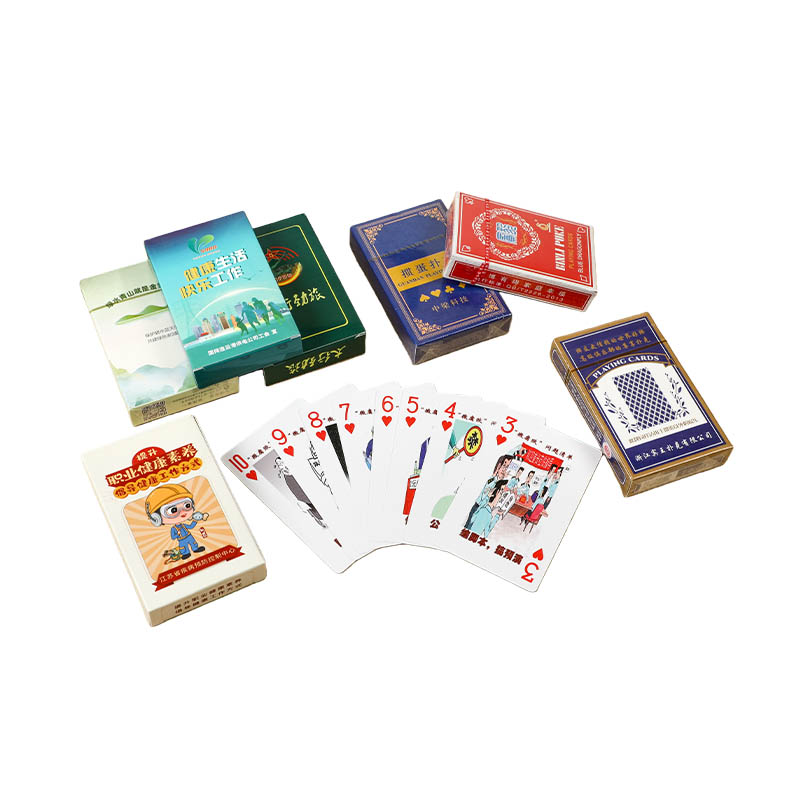
In a thrilling card game, a good deck is not only a tool for the game but also an extension of feel and rhythm. Whether it's a magician's fluid card-cutting or a fast-paced, intense battle between friends, the material and thickness of playing cards profoundly influence the experience of each shuffle, deal, and hold. Seemingly minor differences actually determine whether the cards "obey," whether they can withstand repeated use, and even whether they can become collectible works of art.
First, the material is the foundation for feel and lifespan. Common playing card substrates on the market are mainly paper and plastic. Traditional paper playing cards are usually made of multi-layered cardboard composites with a special coating. High-quality cards are treated with a linen-textured embossing, which not only provides a delicate touch and non-slip grip but also creates just the right amount of friction between the fingers, making the cards easy to separate during shuffling without scattering. This material maintains flexibility while possessing a certain degree of rigidity, suitable for regular home entertainment or light professional use. However, paper cards are prone to curling, fraying, and even tearing in humid environments or with frequent bending. Over time, edge wear becomes noticeable, affecting the smoothness of handling.
In contrast, all-plastic materials (such as PVC or specialized polymers) exhibit drastically different performance characteristics. Plastic cards have an extremely smooth surface, offering almost no resistance during shuffling, making them particularly suitable for magic performances or competitive settings requiring high-speed card cutting and fan-out techniques. Their dense structure makes them completely waterproof, stain-resistant, and tear-resistant, maintaining sharp edges and a flat surface even after hundreds or thousands of uses. However, because of their excessive smoothness, beginners may find them difficult to grip, and they lack the warm tactile feedback of paper cards. Therefore, plastic cards are more favored by professional players and frequent users.
Thickness, like the "skeleton" of the card, directly affects its firmness and handling stability. Thinner cards are flexible and bendable, suitable for fancy shuffling requiring a lot of bending, but a single card can easily deform, and they tend to be slightly loose when stacked. Thicker cards, while sturdy and strong, can feel cumbersome during fast shuffling, hindering smooth interlacing. The ideal thickness strikes a balance between flexibility and rigidity—allowing for agile handling while remaining stable when laid flat, without collapsing or curling.
Even more sophisticated is the surface coating process, which further reconciles the contradiction between smoothness and control. High-end custom playing cards often use special matte or micro-frosted coatings, enhancing wear resistance while giving the cards a subtle "damping feel." This design prevents the cards from becoming uncontrollable due to excessive smoothness or stuck due to roughness, truly achieving a seamless "finger-card" interaction. Some brands also add anti-counterfeiting textures or hidden patterns to the back of the cards, enhancing both the fun and the overall structural strength through fine embossing.
Furthermore, edge treatment is also crucial for durability. High-quality playing cards have smooth, rounded edges, free of burrs, and are less prone to crumbling even after multiple shuffles; inferior products, on the other hand, have sharp or jagged edges, which not only hurt hands but also accelerate wear. Some high-end series even use laser finishing or secondary edge sealing technology to further extend their lifespan.
Ultimately, the smoothness and durability of a deck of playing cards is not a victory of a single parameter, but the result of the synergistic effect of materials, thickness, coating, and craftsmanship. It must satisfy the fingertips' desire for smoothness while withstanding the test of time and use. When a magician unfolds a perfect fan shape with one hand on stage, when friends sit around a table laughing and chatting as cards flutter like butterflies—behind it all, it is the silent support of materials science and meticulous craftsmanship for every precision and pleasure. A truly "good" deck is not about the suit, but about the perfect response in your hand: soft yet not mushy, smooth yet not floaty, and like new even after long use. This is the soul that materials and thickness give to playing cards.
First, the material is the foundation for feel and lifespan. Common playing card substrates on the market are mainly paper and plastic. Traditional paper playing cards are usually made of multi-layered cardboard composites with a special coating. High-quality cards are treated with a linen-textured embossing, which not only provides a delicate touch and non-slip grip but also creates just the right amount of friction between the fingers, making the cards easy to separate during shuffling without scattering. This material maintains flexibility while possessing a certain degree of rigidity, suitable for regular home entertainment or light professional use. However, paper cards are prone to curling, fraying, and even tearing in humid environments or with frequent bending. Over time, edge wear becomes noticeable, affecting the smoothness of handling.
In contrast, all-plastic materials (such as PVC or specialized polymers) exhibit drastically different performance characteristics. Plastic cards have an extremely smooth surface, offering almost no resistance during shuffling, making them particularly suitable for magic performances or competitive settings requiring high-speed card cutting and fan-out techniques. Their dense structure makes them completely waterproof, stain-resistant, and tear-resistant, maintaining sharp edges and a flat surface even after hundreds or thousands of uses. However, because of their excessive smoothness, beginners may find them difficult to grip, and they lack the warm tactile feedback of paper cards. Therefore, plastic cards are more favored by professional players and frequent users.
Thickness, like the "skeleton" of the card, directly affects its firmness and handling stability. Thinner cards are flexible and bendable, suitable for fancy shuffling requiring a lot of bending, but a single card can easily deform, and they tend to be slightly loose when stacked. Thicker cards, while sturdy and strong, can feel cumbersome during fast shuffling, hindering smooth interlacing. The ideal thickness strikes a balance between flexibility and rigidity—allowing for agile handling while remaining stable when laid flat, without collapsing or curling.
Even more sophisticated is the surface coating process, which further reconciles the contradiction between smoothness and control. High-end custom playing cards often use special matte or micro-frosted coatings, enhancing wear resistance while giving the cards a subtle "damping feel." This design prevents the cards from becoming uncontrollable due to excessive smoothness or stuck due to roughness, truly achieving a seamless "finger-card" interaction. Some brands also add anti-counterfeiting textures or hidden patterns to the back of the cards, enhancing both the fun and the overall structural strength through fine embossing.
Furthermore, edge treatment is also crucial for durability. High-quality playing cards have smooth, rounded edges, free of burrs, and are less prone to crumbling even after multiple shuffles; inferior products, on the other hand, have sharp or jagged edges, which not only hurt hands but also accelerate wear. Some high-end series even use laser finishing or secondary edge sealing technology to further extend their lifespan.
Ultimately, the smoothness and durability of a deck of playing cards is not a victory of a single parameter, but the result of the synergistic effect of materials, thickness, coating, and craftsmanship. It must satisfy the fingertips' desire for smoothness while withstanding the test of time and use. When a magician unfolds a perfect fan shape with one hand on stage, when friends sit around a table laughing and chatting as cards flutter like butterflies—behind it all, it is the silent support of materials science and meticulous craftsmanship for every precision and pleasure. A truly "good" deck is not about the suit, but about the perfect response in your hand: soft yet not mushy, smooth yet not floaty, and like new even after long use. This is the soul that materials and thickness give to playing cards.