




Anti-counterfeiting Labels: Building an Indestructible "Shield of Identity" for Products
Release Time : 2025-11-17
In today's world, where counterfeit and substandard goods are rampant and consumer trust crises are frequent, product anti-counterfeiting is no longer a dispensable add-on, but a core line of defense for brand protection, market order maintenance, and even consumer safety. Traditional single anti-counterfeiting methods—such as ordinary printed patterns, simple QR codes, or laser holograms—have long been easily cracked by high-tech counterfeiting. Faced with increasingly intelligent and industrialized counterfeiting chains, only through the deep integration of multiple technologies to build a multi-layered, dynamic, and difficult-to-replicate anti-counterfeiting system can anti-counterfeiting labels truly create an "indestructible shield of identity" for products.
1. Single Anti-counterfeiting Measures are Ineffective; Integration is an Inevitable Trend
In the past, many companies relied on a single anti-counterfeiting technology, such as using only thermochromic ink or static QR codes. However, with the widespread adoption of digital printing, image processing, and material imitation technologies, these methods are easily imitated. Counterfeiters can even mass-produce packaging with "official certification" marks, making it difficult for ordinary consumers to distinguish between genuine and counterfeit products. Anti-counterfeiting labels are evolving from "single-point defense" to "three-dimensional protection," integrating physical, chemical, digital, and biological technologies to form a four-fold verification mechanism that is "visible, tangible, scannable, and accurately verifiable."
2. Typical Combinations of Multiple Technologies
Currently, mainstream high-end anti-counterfeiting labels generally employ an organic combination of the following technologies:
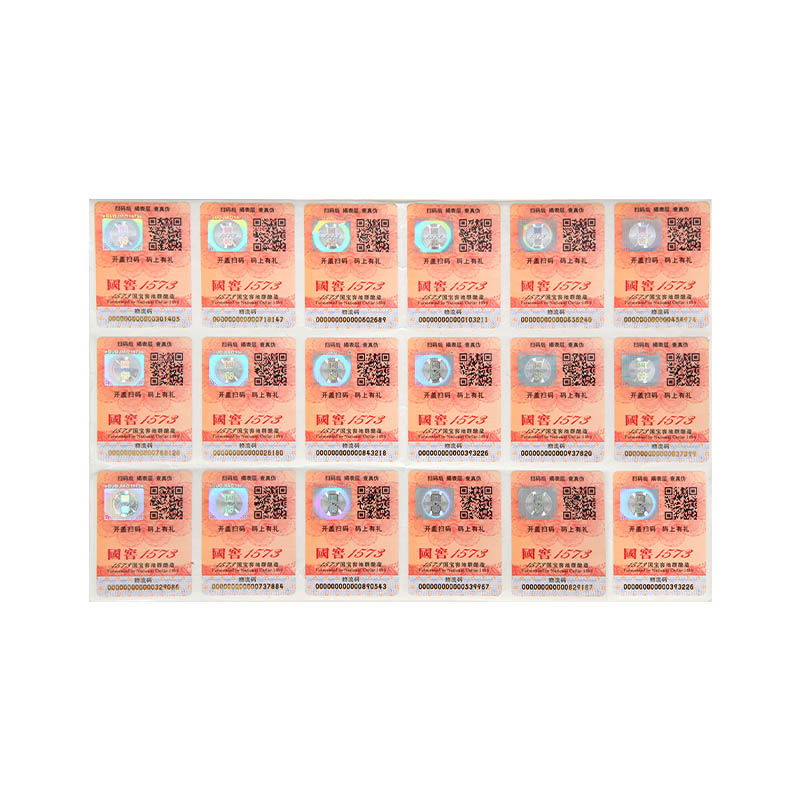
Optical Variable Distribution (OVD): Such as dynamic holography, photochromic inks, and micro/nano structures, these technologies cause the label to display color or pattern changes at different angles, making it initially identifiable with the naked eye and difficult to replicate with ordinary equipment.
Nano/Microprinting: Embedding microtext or nanoscale patterns invisible to the naked eye into the label requires specialized magnification equipment for verification, significantly raising the barrier to counterfeiting.
Digital Identity Binding: Linking the physical label to a cloud database through a unique code (e.g., one code per item). Consumers can scan the code to view product traceability information, production batch, logistics trajectory, etc., achieving "traceable origin and destination."
Blockchain Evidence Storage: Anti-counterfeiting data is stored on the blockchain, leveraging its immutability and distributed storage characteristics to ensure information authenticity and eliminate the risk of backend data tampering.
Invisible Fluorescent/Infrared Marking: Hidden information that only appears under specific wavelengths of light, commonly used for in-depth verification by law enforcement or professional institutions.
Physically Unclonable Functions: Utilizing the natural randomness of the material's microstructure to generate a unique "fingerprint," making it impossible to replicate identical labels even on the same production line, hailed as the "ultimate anti-counterfeiting measure."
These technologies are not simply stacked together, but rather intelligently combined and dynamically upgraded based on product value, distribution environment, and target users. For example, high-end liquor may simultaneously employ 3D dynamic holography + blockchain traceability + PUF chip; while pharmaceuticals focus on thermosensitive color-changing + national drug regulatory code + invisible fluorescence, balancing public usability and regulatory compliance.
3. From "Anti-counterfeiting" to "Empowerment": Extending the Value of Labels
Multi-technology integrated anti-counterfeiting labels go beyond simply combating counterfeits, becoming a new entry point for brand-consumer interaction. While verifying authenticity by scanning QR codes, businesses can push product stories, user guides, membership points, or promotional activities, transforming anti-counterfeiting efforts into marketing touchpoints. Furthermore, in supply chain management, the data feedback from anti-counterfeiting labels can help businesses monitor cross-regional sales, analyze regional sales, and issue early warnings of abnormal circulation, achieving a shift from "passive anti-counterfeiting" to "proactive risk control."
More importantly, a reliable anti-counterfeiting system directly enhances consumer trust. When users receive consistent, transparent, and verifiable information every time they scan a code, the brand's professional image and sense of responsibility are deeply ingrained in their minds. This accumulation of "trust assets" is far more valuable than short-term marketing gains.
In an era where it's difficult to distinguish between genuine and counterfeit products, anti-counterfeiting labels bear the heavy responsibility of brand reputation, consumer safety, and market fairness. Through deep integration of multiple technologies, anti-counterfeiting labels have evolved from static labels into dynamic, intelligent, and interactive "digital ID cards." They are not only a powerful tool in combating counterfeiting but also a bridge of trust connecting brands and users.
1. Single Anti-counterfeiting Measures are Ineffective; Integration is an Inevitable Trend
In the past, many companies relied on a single anti-counterfeiting technology, such as using only thermochromic ink or static QR codes. However, with the widespread adoption of digital printing, image processing, and material imitation technologies, these methods are easily imitated. Counterfeiters can even mass-produce packaging with "official certification" marks, making it difficult for ordinary consumers to distinguish between genuine and counterfeit products. Anti-counterfeiting labels are evolving from "single-point defense" to "three-dimensional protection," integrating physical, chemical, digital, and biological technologies to form a four-fold verification mechanism that is "visible, tangible, scannable, and accurately verifiable."
2. Typical Combinations of Multiple Technologies
Currently, mainstream high-end anti-counterfeiting labels generally employ an organic combination of the following technologies:
Optical Variable Distribution (OVD): Such as dynamic holography, photochromic inks, and micro/nano structures, these technologies cause the label to display color or pattern changes at different angles, making it initially identifiable with the naked eye and difficult to replicate with ordinary equipment.
Nano/Microprinting: Embedding microtext or nanoscale patterns invisible to the naked eye into the label requires specialized magnification equipment for verification, significantly raising the barrier to counterfeiting.
Digital Identity Binding: Linking the physical label to a cloud database through a unique code (e.g., one code per item). Consumers can scan the code to view product traceability information, production batch, logistics trajectory, etc., achieving "traceable origin and destination."
Blockchain Evidence Storage: Anti-counterfeiting data is stored on the blockchain, leveraging its immutability and distributed storage characteristics to ensure information authenticity and eliminate the risk of backend data tampering.
Invisible Fluorescent/Infrared Marking: Hidden information that only appears under specific wavelengths of light, commonly used for in-depth verification by law enforcement or professional institutions.
Physically Unclonable Functions: Utilizing the natural randomness of the material's microstructure to generate a unique "fingerprint," making it impossible to replicate identical labels even on the same production line, hailed as the "ultimate anti-counterfeiting measure."
These technologies are not simply stacked together, but rather intelligently combined and dynamically upgraded based on product value, distribution environment, and target users. For example, high-end liquor may simultaneously employ 3D dynamic holography + blockchain traceability + PUF chip; while pharmaceuticals focus on thermosensitive color-changing + national drug regulatory code + invisible fluorescence, balancing public usability and regulatory compliance.
3. From "Anti-counterfeiting" to "Empowerment": Extending the Value of Labels
Multi-technology integrated anti-counterfeiting labels go beyond simply combating counterfeits, becoming a new entry point for brand-consumer interaction. While verifying authenticity by scanning QR codes, businesses can push product stories, user guides, membership points, or promotional activities, transforming anti-counterfeiting efforts into marketing touchpoints. Furthermore, in supply chain management, the data feedback from anti-counterfeiting labels can help businesses monitor cross-regional sales, analyze regional sales, and issue early warnings of abnormal circulation, achieving a shift from "passive anti-counterfeiting" to "proactive risk control."
More importantly, a reliable anti-counterfeiting system directly enhances consumer trust. When users receive consistent, transparent, and verifiable information every time they scan a code, the brand's professional image and sense of responsibility are deeply ingrained in their minds. This accumulation of "trust assets" is far more valuable than short-term marketing gains.
In an era where it's difficult to distinguish between genuine and counterfeit products, anti-counterfeiting labels bear the heavy responsibility of brand reputation, consumer safety, and market fairness. Through deep integration of multiple technologies, anti-counterfeiting labels have evolved from static labels into dynamic, intelligent, and interactive "digital ID cards." They are not only a powerful tool in combating counterfeiting but also a bridge of trust connecting brands and users.